
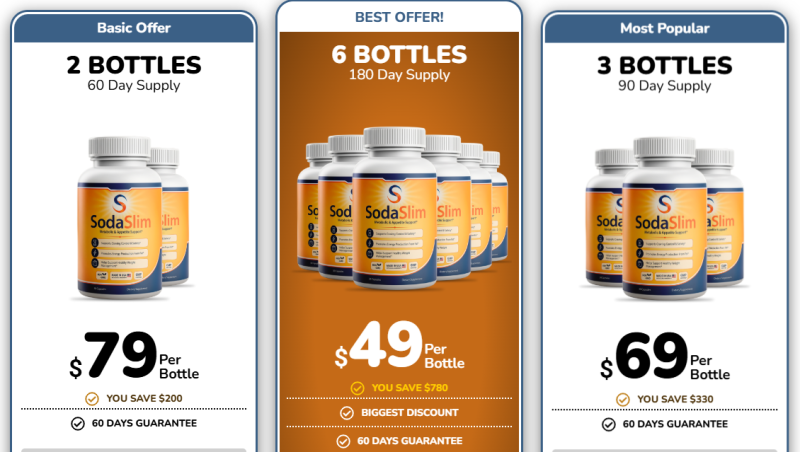
SodaSlim promises to help you lose weight with a blend of natural ingredients said to boost fat burning, curb appetite, and improve gut health. The ads make it sound like an effortless solution, but the science behind those claims is far less convincing.
We examined the ingredients, customer reviews, marketing tactics, and online reputation to determine whether SodaSlim is a legitimate supplement or another product relying on hype to drive sales.
In a Nutshell
SodaSlim is a real supplement you can actually order and receive. That is not the same as saying it works. The formula leans on common weight loss ingredients with weak evidence behind them, the marketing around it has used misleading tactics, and the flood of paid "review" sites makes it hard to find an honest opinion. Treat any purchase as a gamble, not a guaranteed fix.
SodaSlim is a dietary supplement sold online and marketed as a weight management aid. The sales pages describe it as a natural formula that supports fat burning, appetite control, and gut health. It ships as capsules meant to be taken daily.
The label lists ingredients most people have heard of before: green tea extract, garcinia cambogia, chromium, B vitamins, and probiotics. Each of these has been studied on its own in small trials, and the results are mixed at best. None of that research was done on the SodaSlim formula itself, at the doses used in this product.
That gap matters. A company can point to a study on green tea and imply the same result applies to its capsule, when no one has actually tested the finished product on real customers in a controlled trial. No such trial exists for SodaSlim. So the honest answer is that nobody outside the company knows whether this specific mix does what the packaging promises.
There is also a wider problem in this product category. Some marketing tied to SodaSlim has appeared alongside fake celebrity endorsements, including AI generated video clips designed to look like a real news segment. If you have seen an ad claiming a famous doctor or TV personality backs this product, that ad is fabricated. No legitimate supplement needs a fake celebrity to sell itself.
Customer feedback paints a rougher picture than the sales pages do. On Trustpilot, the site soda-slim.us carries a rating of just 2.9 out of 5 stars. One reviewer summed up their experience bluntly: "very bad product i dont like this product." Short, blunt complaints like this tend to show up when a product fails to deliver on its promises rather than when something more serious like a billing scam is happening.
Buyers have also reported confusion over which website is the real one. Multiple domains sell SodaSlim under slightly different names and packaging, which makes it harder to know where a refund request should go or which site actually ships a genuine product.
SodaSlim ads have spread widely on platforms like YouTube, including videos that walk through exaggerated before-and-after claims.
Social platforms make it easy for a supplement company to reach millions of people with a short clip and a discount code, long before any independent reviewer has had time to check the claims. By the time a skeptical review shows up in search results, thousands of people have already bought a bottle. Worse, a large share of the "reviews" you find by searching the product name are written by affiliate marketers who earn a commission on every sale, not independent testers.
SodaSlim is not an outright scam in the sense of taking your money and sending nothing. But the case for it working is thin, the marketing has crossed into misleading territory with fake celebrity claims, and the low Trustpilot score suggests real buyers are walking away disappointed. If you are managing your weight, a doctor or registered dietitian will give you guidance backed by more than a sales page.
Frequently Asked Questions
Is SodaSlim FDA approved?
No. The FDA does not approve dietary supplements before they reach the market. Any claim of FDA approval on a supplement label is false.
Is SodaSlim safe to take?
Ingredients like green tea and chromium are generally recognized as safe in normal doses, but anyone on medication or with an existing health condition should check with a doctor first, since supplement labels are not always accurate about dosage.
Where can I check reviews before buying?
Look at Trustpilot and the Better Business Bureau rather than the product's own website, and be aware that many "review" blogs are paid to promote the product.
Before you buy from an unfamiliar site, run the domain through ScamAdviser's trust checker. It looks at how old the website is, where it is hosted, whether it hides its ownership, and how it compares to known scam patterns. A quick check takes seconds and can save you from a chargeback fight later. If you already lost money to a supplement site, report it so other shoppers can be warned.
This article has been written by a scam fighter volunteer. If you believe the article above contains inaccuracies or needs to include relevant information, please contact ScamAdviser.com using this form.
Adam Collins is a cybersecurity researcher at ScamAdviser who operates under a pseudonym for privacy and security. With over four years on the digital frontlines, he specialises in translating complex threats into actionable advice. His mission: exposing red flags so you can navigate the web with confidence.
