

SodaTide Metabolic & Digestive Support Supplement is marketed as a dietary supplement for metabolic and digestive support. Its marketing focuses heavily on probiotics, prebiotics, gut health, and the connection between the gut microbiome and overall metabolic wellness.
At first glance, the formula may look appealing because several of its ingredients are commonly associated with digestive and microbiome health. However, our review found several documentation and transparency issues that prospective buyers should consider before purchasing.
This review does not make a definitive claim about the company's intentions. Instead, it looks at publicly available information, including the product's online marketing, Supplement Facts information, different versions of the product, and analysis of independent review platforms.
One of the most noticeable issues with Soda Tide Metabolic & Digestive Support Supplement is that the probiotic information does not found to be consistent across the product's marketing materials.
On certain sales pages, the product marketing discusses several well known probiotic strains, including:
The marketing material also explains the potential benefits and clinical relevance of these strains.
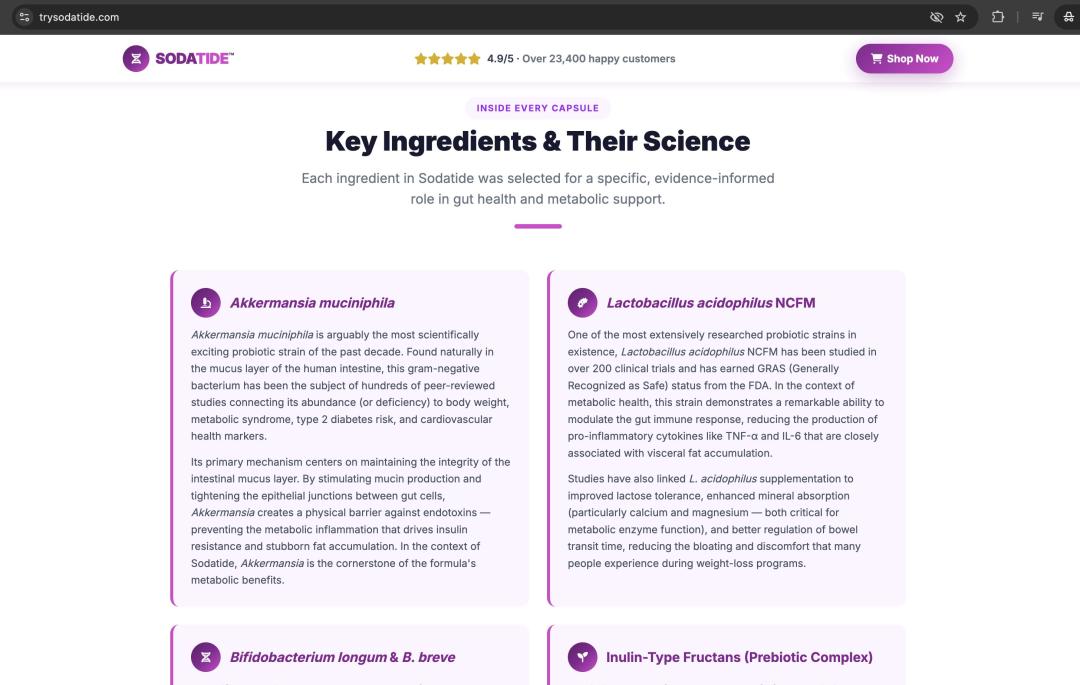
However, when looking at the Supplement Facts information shown as the product label in the same website, those specific strains are not listed. Instead, the bottle's formulation identifies a different group of microorganisms, including:
This difference is important because a consumer reading the marketing material could reasonably expect the highlighted probiotic strains to be the ones contained in the product.
The issue here is not simply whether one group of bacteria is better than another. The bigger concern is that the marketing information and the Supplement Facts presentation on product label do not describe the same probiotic formulation.
That creates a documentation and transparency problem for consumers trying to understand exactly what they are buying.
The situation becomes more complicated when looking at products sold through secondary marketplace channels. There appears to be another Soda Tide version using the same general product identity, purple branding, and logo. However, the Supplement Facts information on this version is substantially different.
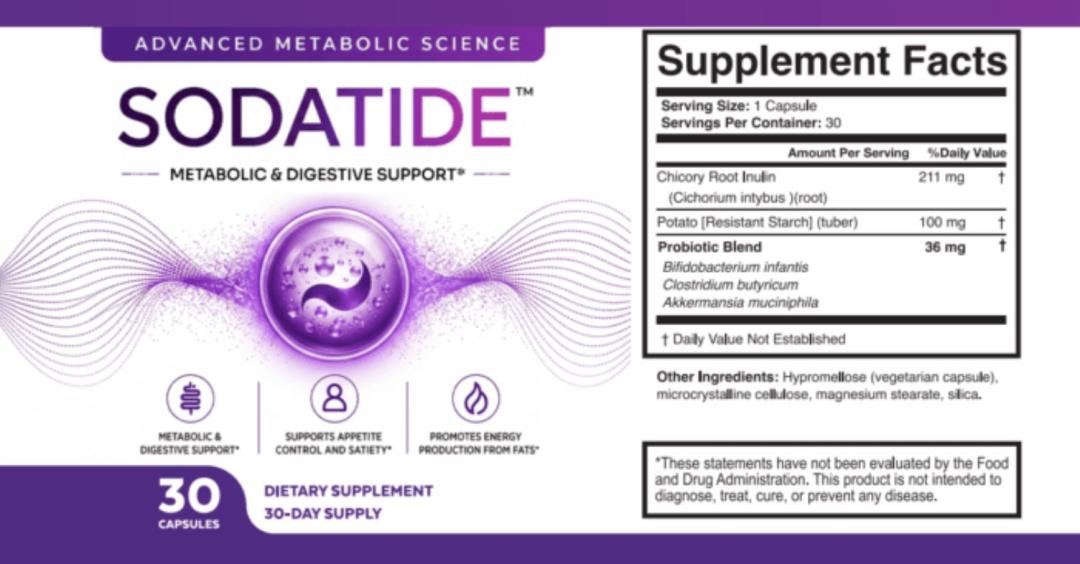
The direct sales version is presented as a 30-capsule bottle with a one capsule serving size. It contains a probiotic structure measured in milligrams along with prebiotic ingredients.
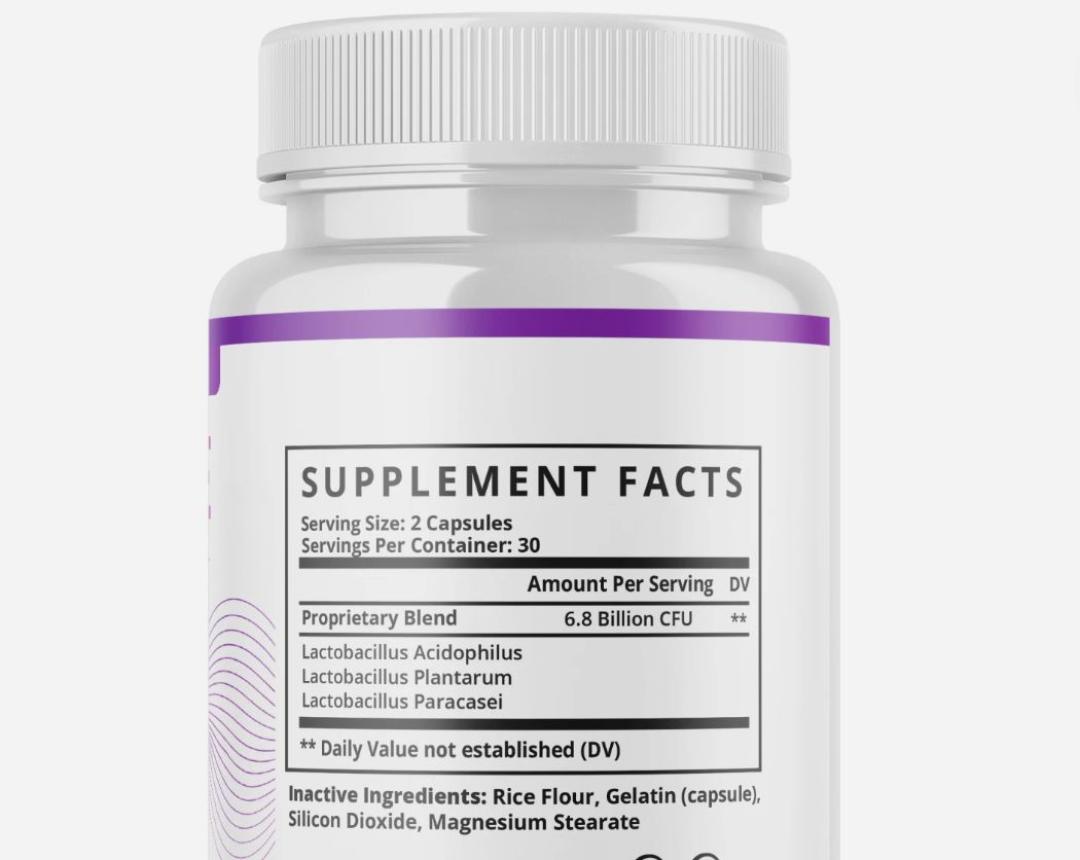
The marketplace version is presented as a 60-capsule bottle with a two capsules serving size.
More importantly, the marketplace formulation does not contain the same prebiotic structure. Instead, it lists a 6.8 billion CFU proprietary probiotic blend containing:
So, consumers searching for SodaTide supplement may encounter bottles that look like the same product but have different serving sizes and substantially different ingredient panels.
This creates another transparency concern because consumers generally need consistent product information to understand what they are purchasing, compare batches, and assess whether the product matches the advertised formulation.
The direct sales version has another labeling issue involving how its probiotic blend is measured. The formulation containing Akkermansia muciniphila lists the probiotic blend at 36 mg.
As per publicly avaiable information, for probiotics, CFU, or colony-forming units is commonly used to indicate the number of viable microorganisms. A weight measurement in milligrams does not tell consumers how many live microorganisms are actually present. This means that knowing the blend weighs 36 mg does not, by itself, tell a consumer how many viable bacteria are included.
There is another limitation. The 36 mg figure represents the combined probiotic blend, rather than giving a separate amount for each microorganism. Therefore, consumers cannot determine exactly how much Akkermansia muciniphila, for example, is present in that total. This makes it difficult to compare the formulation with other probiotic products or determine the specific amount of an individual microorganism.
The direct sales version of SodaTide contains 211 mg of chicory root inulin and 100 mg of potato resistant starch. As per publicly avaiable information, Inulin is a type of dietary fiber with prebiotic properties. Both ingredients are relevant to gut health discussions. Inulin is a type of prebiotic fiber, while resistant starch can also be used as a substrate for gut bacteria.
However, as per publicly avaiable information, the quantities listed on the product label are relatively small when compared with the gram-level amounts commonly discussed for dietary or prebiotic fiber support.
According to information from WebMD, Inulin intake can vary depending on its intended use, with some uses involving amounts in the 3 to 10 gram daily range. In comparison, the 211 mg of chicory root inulin listed in SodaTide is considerably lower than those amounts.
This does not mean that these ingredients have no value or that a particular amount cannot have an effect. There is no single universal dose that works for every person or every health purpose.
The point is that consumers should not automatically assume that simply including a prebiotic ingredient means the product provides the same level of intake used in studies or higher dose dietary applications.
The marketplace version does provide a total probiotic amount: 6.8 billion CFU. That is more informative than simply providing a total weight in milligrams. However, the individual strains are grouped into a proprietary blend.
As a result, consumers can see the total CFU number but cannot determine the exact amount allocated to Lactobacillus acidophilus, Lactobacillus plantarum, or Lactobacillus paracasei.
This is important when a consumer is specifically interested in one particular strain.
Without individual quantities, it is difficult to know whether each strain is included in a meaningful amount or how the total 6.8 billion CFU is divided among the different microorganisms. It simply limits the amount of information available to consumers when evaluating the product.
SodaTide's promotional pages, such as TrySodaTide.com, claim a 4.9 out of 5 rating from more than 23,400+ happy customers. That is a significant number of customers, so we would normally expect to see some independent customer feedback online.
However, at the time of this review, our research found no documented user footprint, corporate profile, or organic review thread for SodaTide on independent review platforms such as Trustpilot.
Some online only products may have very little presence on independent review platforms. However, the difference between a claim of more than 23,400+ satisfied customers and the lack of a clear independent review footprint is something consumers should consider before relying on the rating shown on the sales page.
The main concerns with SodaTide or Soda Tide are not that every ingredient is problematic, but rather the lack of clear and consistent product information. Ingredients such as chicory root inulin, resistant starch, and probiotics have been studied for their possible role in digestive health and the gut microbiome. So, these ingredients themselves are not the main concern.
The bigger question is whether consumers can clearly understand what is actually in the product, how much of each probiotic is included, how the probiotic amounts are measured, and whether the different versions sold online contain the same formula. Based on the information we reviewed, SodaTide raise questions in these areas.
Imagine buying the same brand of coffee twice and discovering that one package contains coffee beans while the other contains tea leaves. The packaging may look similar, but the contents are obviously not the same. Supplements are more complicated, but the basic idea is similar.
If one SodaTide formulation contains a milligram based probiotic blend and prebiotic fibers, while another Soda Tide version contains a 6.8 billion CFU probiotic blend without the same prebiotics, consumers need clear information explaining why the formulas are different.
Without that explanation, it becomes difficult to assess:
For a supplement marketed around specific probiotic and microbiome benefits, that level of clarity is especially important.
Overall, SodaTide Metabolic & Digestive Support Supplement raise some transparency concerns that buyers should think about before placing an order.
There are some positive points. Ingredients such as chicory inulin, resistant starch, and different lactic acid bacteria have been studied for their possible role in digestive health and the gut microbiome. However, the bigger concern is how clearly the product information is presented. Some probiotic strains discussed in the website's marketing do not appear on the actual ingredient label.
There are also different Soda Tide versions with noticeably different formulas, even though they use similar branding. On top of that, we could not find an independent review presence that clearly matches the large number of customers claimed in the product's promotional material.
This does not automatically mean the product is ineffective. However, these differences make it harder for consumers to know exactly what they are buying and how much of each ingredient they are actually getting.
If you are considering SodaTide supplement, it is worth checking the exact Supplement Facts label, manufacturer details, batch testing information, and the amounts provided for each probiotic strain before purchasing.
And since everyone's biology can respond differently to probiotics and prebiotics, consulting with a qualified healthcare professional or primary care physician before starting a new dietary supplement is a sensible step.
Verification Notice: Please double-check the physical product label of any supplement you purchase to confirm the active ingredients, exact dosages, and allergen warnings match your expectations before consumption.
Disclaimer: Dietary supplements are not regulated by the FDA and can cause dangerous interactions with prescriptions. Consult a doctor before starting any supplements. This review does not diagnose or treat medical conditions, nor does it claim the product fails for everyone. Individual results vary. Studies on individual ingredients do not prove the efficacy of the final blend.
Medical Disclaimer: This information is for general educational purposes only, does not constitute a promotion or endorsement of any product, and does not constitute medical advice, diagnosis, or treatment. Always consult a qualified healthcare professional or physician before starting any new dietary supplement.
Author Information:
This article has been written by a Scam Fighter Contributor, De-Reviews.com Team. If you believe the article above contains inaccuracies or needs to include relevant information, please contact ScamAdviser.com using this form.
De-Reviews.com Team is a group of scam researchers, editors, and online safety advocates dedicated to exposing online fraud and helping consumers stay safe online. The team has been investigating scams, fraudulent websites, phishing campaigns, and other online threats since 2014. Read the Full Author Profile.
