
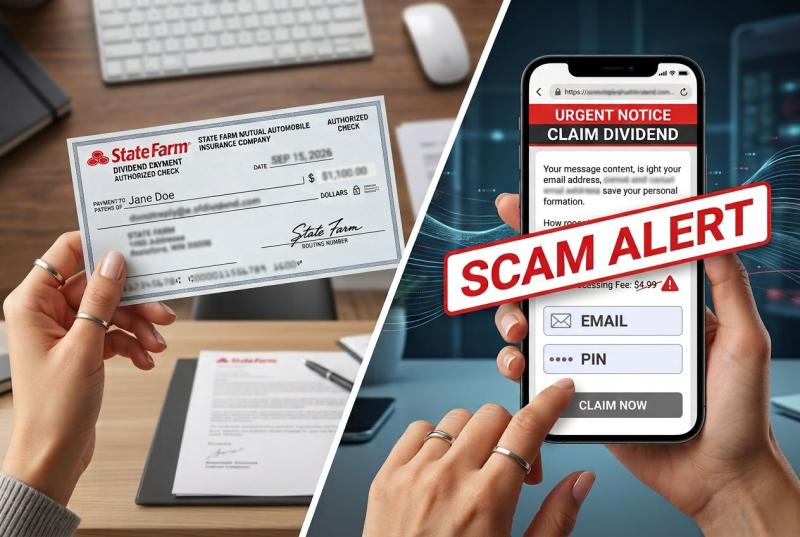
The official State Farm Dividend Check Payment is 100% Legit, but fake emails, text messages, and websites impersonating this payment are active phishing scams. State Farm Mutual Automobile Insurance Company is currently issuing a historic $5 billion dividend payout to qualifying auto insurance customers.
Because this payout involves sending billions of dollars to millions of policyholders via digital links and mailed checks, cybercriminals are actively trying to exploit the rollout. Scammers are launching copycat phishing campaigns to steal personal information, bank account credentials, and money.
State Farm is returning $5 billion to eligible policyholders following a profitable financial year. Unlike publicly traded companies owned by stockholders, State Farm is a mutual insurer owned by its policyholders. When the company generates strong profits, it returns value directly to its policyholder-members.
Many policyholders initially assumed the notification email was a scam and deleted it. The real email looks unusual because:
Scammers are creating copycat emails, fake websites, and fraudulent text messages designed to mimic the official payout. Use this chart to verify your notification:
Feature Official State Farm Notification Phishing Scam / Fake Message Sender Email donotreply@e.sfdividend.com Fake domains (e.g., @statefarm-payouts.com, @sf-dividends-notice.org, Gmail) Official Portal SFDividend.com Fake websites (e.g., claim-statefarm-dividend.com) Text Messages (SMS) NONE. State Farm does not notify by text. SMS or messaging apps claiming urgent money is waiting. Phone Calls NONE. State Farm does not call customers about this. Robocalls or live callers asking for banking info. Upfront Fees $0. Never required. Demands a processing, verification, or expedited delivery fee. Sensitive Data Uses unique PIN & Policy ID on SFDividend.com Demands email passwords, online banking logins, or 2FA PINs.Scammers use several tricks to lure victims. Here are common real world examples of how these fraudulent attacks operate:
Example 1: The Urgent Text Message (Smishing Scam):
"ALERT: Your State Farm dividend check of $114.50 is ready! Click here to claim your Zelle refund before it expires in 24 hours: [link
removed for safety)"
Why it is a scam: State Farm never uses text messages or SMS alerts for this dividend payout. Any text message claiming you have a State Farm refund waiting is fraudulent.
Example 2: The Upfront Processing Fee Scam:
An email claims your $100 dividend check is ready. When you click the link, the fake site asks for a $4.99 "identity verification fee" or "instant transfer fee" via credit card or gift card.
Why it is a scam: State Farm will never ask you to pay money, wire funds, or buy gift cards to receive your dividend payment.
Example 3: The "Free Roadside Safety Kit" Survey Scam:
You receive an email or advertisement promising a "Free State Farm Emergency Roadside Kit" or an extra cash bonus if you complete a quick 5-minute feedback survey.
Why it is a scam: State Farm is not running any giveaway promotions or free survey gifts associated with this dividend. These surveys exist to steal contact details and force users into hidden subscription charges.
Treat any dividend notification as a scam if you encounter any of the following red flags:
If you receive a notification and feel uncertain, take these steps to stay safe:
The State Farm $5 Billion Dividend Payout is 100% legit, but active phishing scams are exploiting the rollout. Cybercriminals are launching fake text messages, lookalike website domains, spam calls, and "free survey gift" traps to steal sensitive banking and personal credentials. The State Farm will never text you, call you, demand passwords/verification codes, or require an upfront fee.
Genuine notifications come strictly from donotreply@e.sfdividend.com and direct you to SFDividend.com (powered by Verita). Policyholders without an email on file receive a physical check automatically. When in doubt, bypass email links entirely and navigate directly to SFDividend.com or call your local agent.
The information in this article is provided for educational and awareness purposes. Company names, phone numbers, sender names, and other details referenced may have been impersonated, spoofed, or otherwise misused by scammers. Their appearance in this article does not necessarily identify the legitimate company, owner of a phone number or account as being involved in fraudulent activity.
This article has been written by a Scam Fighter Contributor, De-Reviews.com Team. If you believe the article above contains inaccuracies or needs to include relevant information, please contact ScamAdviser.com using this form.
De-Reviews.com Team is a group of scam researchers, editors, and online safety advocates dedicated to exposing online fraud and helping consumers stay safe online. The team has been investigating scams, fraudulent websites, phishing campaigns, and other online threats since 2014. Read the Full Author Profile.
