
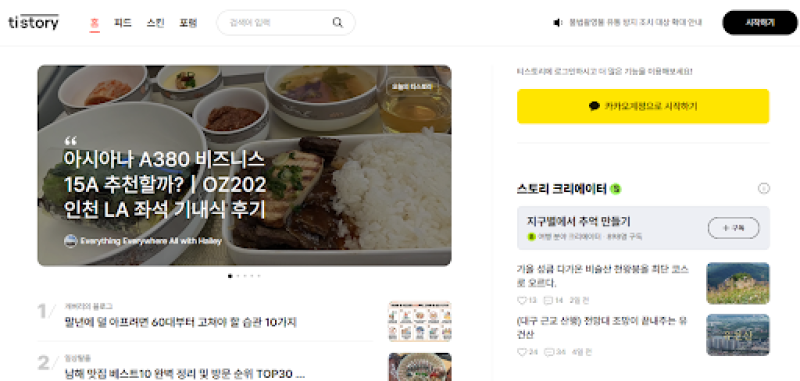
Tistory.com operates as a massive, free blog-publishing service owned by the South Korean tech giant Kakao Corporation. ScamAdviser gives the domain a perfect Trust Score of 100/100, labeling it as a highly trusted site. If you're asking is this website legit before clicking a link or starting your own page, the evidence points toward it being a completely safe and genuine platform. It functions similarly to WordPress or Medium, serving millions of legitimate users daily.
At its core, Tistory.com is a content management system and hosting provider that lets individuals build and customize their own blogs. Users create subdomains to publish articles, share photos, and monetize their traffic through integrated advertising networks. While the platform itself operates as a standard web service, it essentially functions as a massive host for user-generated content. Because anyone can create a page, it resembles other major blogging platforms where the underlying infrastructure is perfectly safe, even if you might occasionally stumble across a user-created page promoting an external dropshipping storefront or crypto giveaway.
Diving deeper into the data behind that 100/100 rating, several transparent data points confirm its legitimacy. The domain age is a major factor, as it was registered over two decades ago in 2005. The WHOIS ownership records clearly point to Kakao Corp, a massive publicly traded company. Furthermore, the traffic ranking is astronomically high, placing it among the most visited sites globally. Technical flags show a valid HTTPS connection and a clean record across third-party threat databases. There are no business model risk flags tied to the core domain, confirming it operates exactly as a major tech platform should.
Running these numbers is exactly the kind of website safety check people should run before engaging with a new platform or handing over personal information. Learning how to check if a website is legit is an essential digital skill, especially when you are navigating unfamiliar international domains.
Whether you are starting a blog or shopping for shoes, you should always take a few minutes to verify a site's background. Knowing how to tell if a site is legit can save you from a massive headache down the line. Follow these simple steps:
The most significant tell that this platform is genuine is its absolute lack of high-pressure monetization tactics. Deceptive networks rely on countdown timers, fake urgency, or aggressive upsell patterns to force a transaction. This site provides a straightforward, free utility without demanding your credit card information upon registration.
The transparency of its parent company removes the anonymity that usually shields fraudulent operators. There are no rising withdrawal minimums or hidden subscription traps, just a standard user agreement for hosting content.
When users review the service on app stores and third-party sites, their complaints usually focus on basic software bugs or image upload failures. These technical frustrations are the hallmarks of a real software product rather than a fraudulent scheme.
Because this platform operates as a free hosting service, there is no physical product delivery to track. However, if you are wondering whether the platform delivers on its promise to host content and allow creators to monetize, the evidence indicates that it functions exactly as advertised. Users successfully create pages, upload media, and integrate ad networks without systemic payout issues from the parent company. If you happen to be buying a product from a third-party seller who simply built their store on a Tistory subdomain, you need to vet that individual seller independently, as the platform itself does not process refunds or guarantee third-party deliveries.
The overwhelming amount of technical and corporate evidence points toward this being a legitimate site. With a massive global traffic footprint, decades of history, and backing by a major tech conglomerate, the core platform is highly reliable. If you are interacting with the main site, there is every indication that it is safe to use.
However, if you have already signed up to buy something from a random user's individual blog on the platform, remember that the parent company does not vet every independent post. Never enter payment info on an unverified user page, do not reuse passwords across different storefronts, and stop engaging immediately if a specific blogger demands cryptocurrency.
If you ever need to check a website's safety, ScamAdviser's website safety checker makes the process effortless. The tool scans millions of records to analyze domain age, hosting details, and consumer reports to give you a clear Trust Score in seconds. You can even download the ScamAdviser mobile app to automatically block fraudulent sites and dangerous links on the go. Before you make your next online purchase, download the app and let the algorithm do the heavy lifting.
The evidence points toward Tistory.com being a completely legitimate and safe blogging platform owned by Kakao Corp. It has operated for over two decades and maintains a massive, genuine user base.
ScamAdviser gives it a high Trust Score because it has immense global traffic, transparent corporate ownership, and a domain age dating back to 2005. It also passes all technical security checks with a valid HTTPS connection.
No, the core blogging and hosting services are completely free to use. You do not need to enter credit card information to start a standard blog on the platform.
Yes, creators can monetize their blogs by integrating standard advertising networks into their pages. However, the income depends entirely on the traffic the individual blogger generates.
While the hosting platform itself is safe, anyone can create a blog. If you are asking is this a legit website to buy physical goods from, you must research the individual seller, as Tistory does not guarantee third-party purchases or offer refunds for them.
This article has been written by a scam fighter volunteer. If you believe the article above contains inaccuracies or needs to include relevant information, please contact ScamAdviser.com using this form.
Adam Collins is a cybersecurity researcher at ScamAdviser who operates under a pseudonym for privacy and security. With over four years on the digital frontlines, he specialises in translating complex threats into actionable advice. His mission: exposing red flags so you can navigate the web with confidence.
