
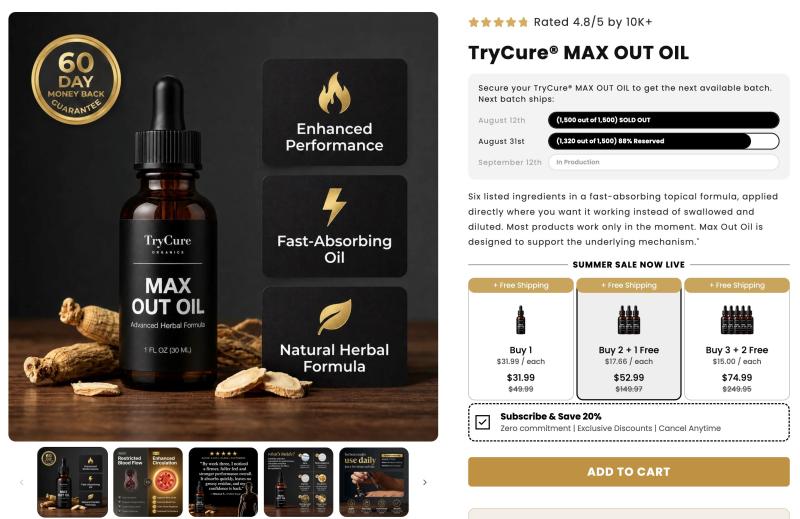
TryCure Max Out Oil is a topical product marketed for circulation, stamina, firmness, performance and male wellness. However, publicly available information raises several concerns, including significantly different ingredient lists across TryCure storefronts, complaints from customers on independent review platforms, repeated testimonial content, and a lack of robust clinical evidence supporting the product’s stronger claims. Consumers should carefully review the product details and consider these red flags before making a purchase.
Unlike traditional oral capsules and dietary supplements, TryCure Max Out Oil is designed for topical application. The brand claims that applying the product directly to the target area allows its ingredients to work locally without first passing through the digestive system and liver. Its marketing focuses on mechanisms related to blood vessel function, circulation, skin conditioning, stamina, and firmness.
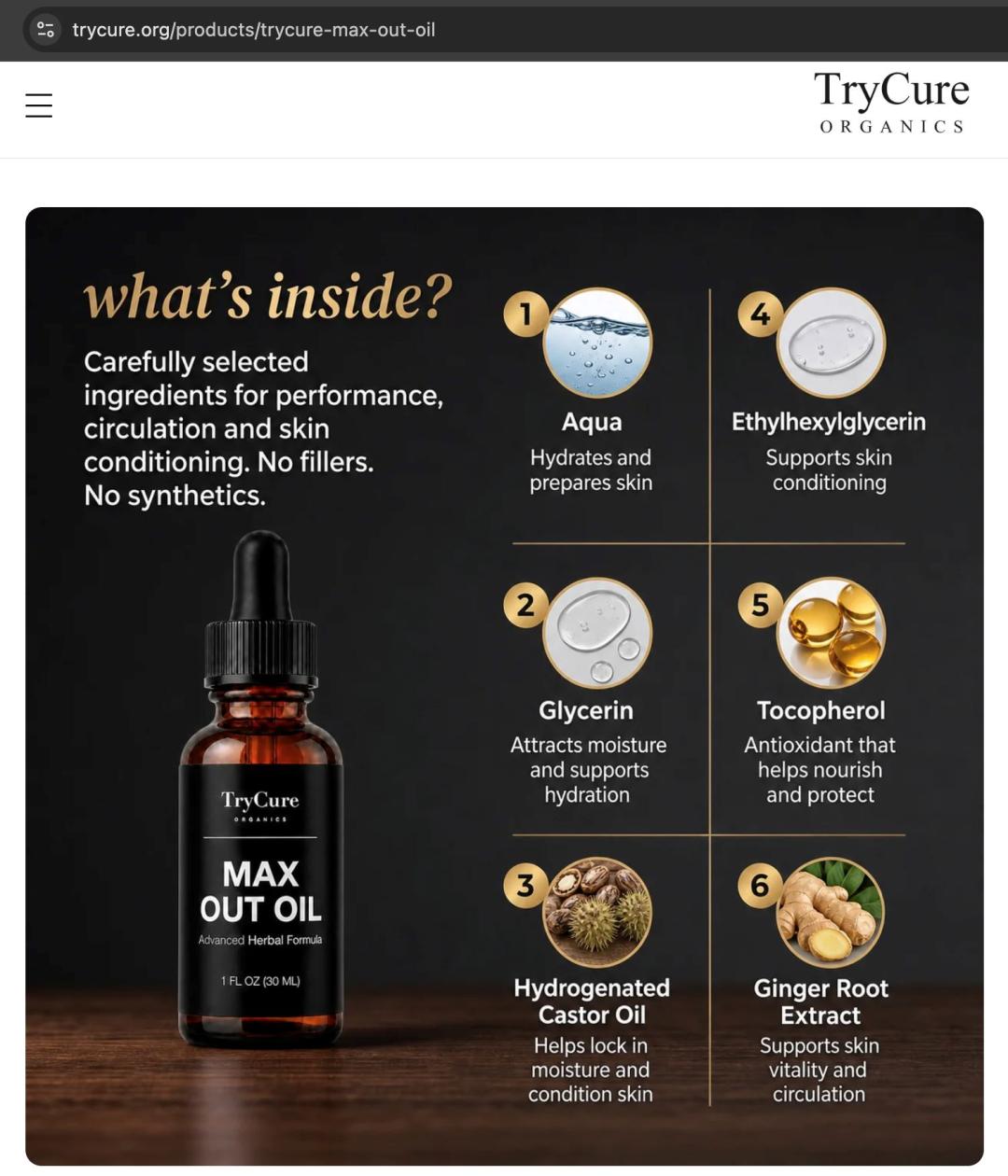
However, there is an important issue to consider before accepting these claims: the ingredient list is not consistent across the different TryCure storefronts.
The formulation displayed on trycure.org is presented as a relatively simple, water based cosmetic blend containing six primary ingredients.
Aqua and Glycerin: These provide a basic hydrating foundation. Publicly available information indicates that topical glycerin can help restore physiological hydration and support the epidermal barrier. Consumers can review the relevant research in the National Institutes of Health (NIH) PMC Archive.
Hydrogenated Castor Oil and Ethylhexylglycerin: These are listed as skin conditioners and stabilizers intended to help maintain the product's texture and formulation.
Tocopherol (Vitamin E): Publicly available information identifies vitamin E as a commonly used antioxidant and skin conditioning ingredient.
Zingiber Officinale (Ginger) Root Extract: Ginger is a botanical ingredient that may produce a warming or tingling sensation when applied topically. Consumers can review publicly available information concerning its topical skin penetration and anti-inflammatory properties through the PubMed Central (PMC) Archive.
Based on this ingredient list, Formula A appears primarily focused on hydration, skin conditioning, and topical sensory effects.
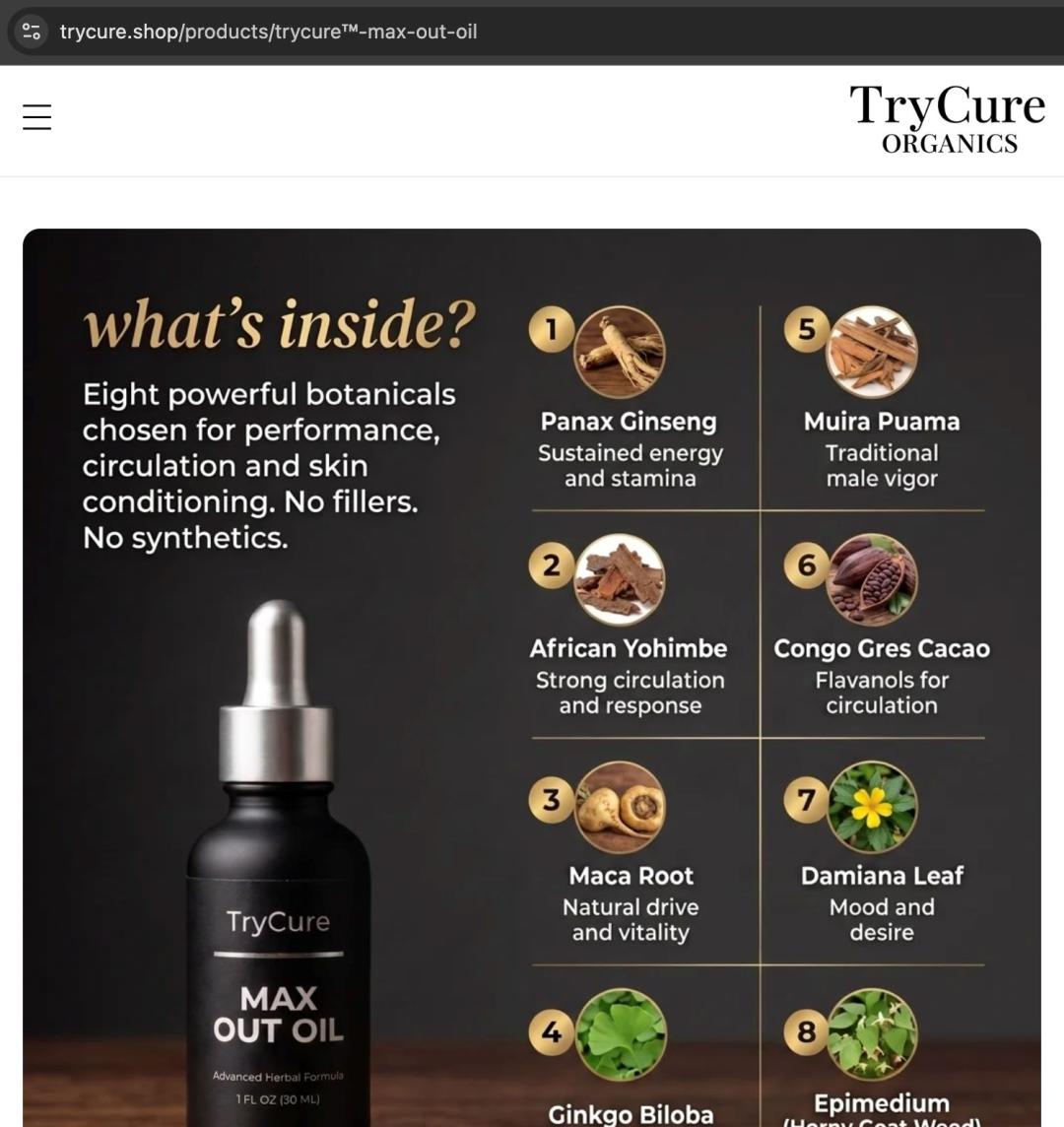
The formulation listed on trycure.shop is substantially different. Rather than the water based formula shown above, this version is described as an oil based herbal complex using fractionated coconut oil as its base.
It lists eight performance related botanicals and ingredients, including:
Circulation botanicals:
African Yohimbe Extract, Ginkgo Biloba, and Muira Puama. While yohimbe is traditionally associated with supporting blood flow, you can look up its safety restrictions and the U.S. Food and Drug Administration (FDA) Prohibitions regarding over-the-counter performance claims. To read about its systemic impacts on blood pressure and heart rate, view the clinical studies on PubMed.
Adaptogens and herbs:
Skin conditioning:
The difference between these two formulas is significant. A consumer visiting one TryCure storefront could therefore encounter a completely different ingredient profile from a consumer visiting another.
There are traditional uses and some research surrounding several of the botanicals listed in Formula B. However, the presence of an ingredient does not by itself prove that the finished TryCure product produces the advertised results.
What May Work: If you receive Formula B, herbs like Ginkgo Biloba and Yohimbe do possess traditional histories of supporting localized circulation as per publicly available information. Furthermore, the physical act of regular manual massage detailed in the instructions can naturally stimulate short term localized blood flow to tissue.
What May Not Work: If you receive Formula A, the product is essentially a premium skin moisturizer. As publicly available information, Glycerin, water, and castor oil are incapable of permanently altering tissue structure, resolving severe underlying performance or circulatory issues, or changing physical anatomy. The activating warmth users feel is largely the topical effect of ginger extract or yohimbe irritating the surface of the skin.
The Pros:
The Cons:
The product websites reportedly display an impressive 4.8 out of 5-star rating from more than 10,000 shoppers. However, independent consumer information presents a more complicated picture.
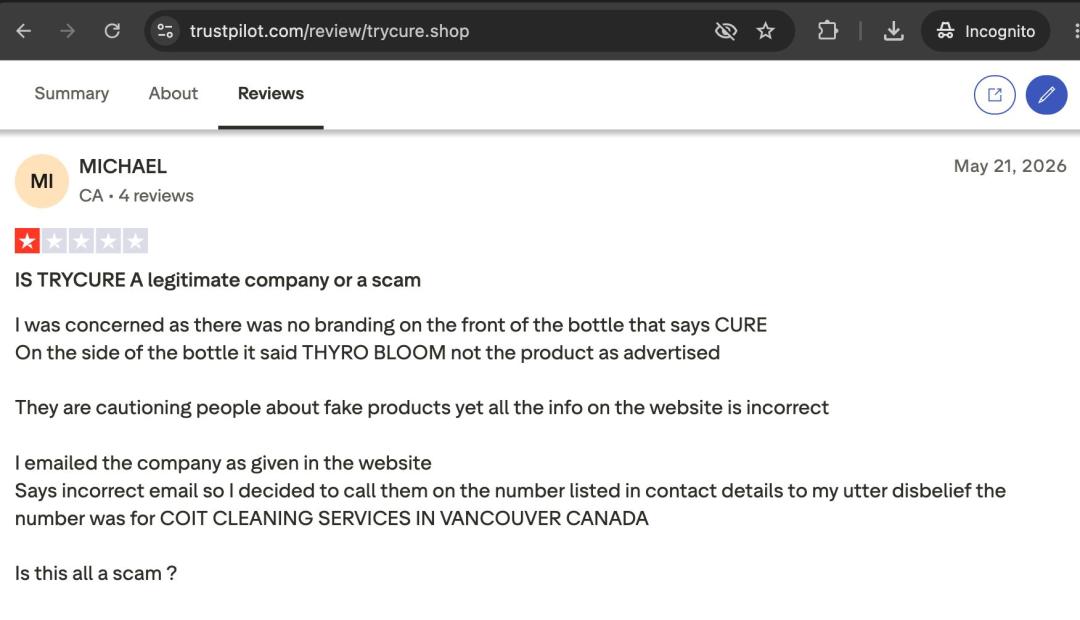
Trustpilot Evaluation:
The "trycure.shop" reportedly has a 4.1 out of 5 rating based on roughly 37 reviews on Trustpilot.
One important concern is that many of the positive reviews reportedly come from people taking oral drops for underactive thyroid conditions, rather than customers reviewing TryCure Max Out Oil.
Another website selling TryCure Max Out Oil, "trycure.org", reportedly has 0 independent reviews on Trustpilot.
This makes it difficult to treat the overall customers reviews and ratings on its own websites as clear evidence of customer satisfaction specifically with TryCure Max Out Oil.
BBB Scam Tracker:
The BBB Scam Tracker has logged customer filings reporting difficulties reaching the company's customer care phone lines, receiving unbranded or completely different items, and finding that the listed support phone numbers routed to disconnected lines or unrelated businesses. This complaint reflect more about "trycure.shop" storefront rather than product complaint.
TryCure Max Out Oil relies heavily on aggressive internet marketing, utilizes conflicting ingredient data, and features no verified clinical studies on its actual formula to support its claims. While the physical act of massage using localized skin conditioners like coconut oil or glycerin can offer basic skin hydration and short term cosmetic firmness, as per publicly available information, there is no robust scientific backing to validate its structural claims.
Given the verified consumer reports of buyers receiving mismatched bottles, alongside the known side effects of topical ingredients, consumers should exercise an abundance of caution, document their purchases thoroughly, and consult a medical professional for regulated male wellness solutions.
This article is a subjective review intended strictly for educational, informational, and critical commentary purposes. The views and opinions expressed herein are based on an independent analysis of publicly available marketing materials, storefront ingredient listings, and third-party consumer reporting platforms at the time of writing.
We do not claim that this product is a scam or that every customer will have the same experience. Receiving a product does not necessarily mean it is ineffective, and individual results may vary. However, consumers should carefully evaluate product claims, ingredient information, website transparency, and available evidence before making a purchase decision.
All product names, logos, and trademarks (including "TryCure" and "Max Out Oil") are the property of their respective owners and are used here solely for descriptive and identification purposes under fair use guidelines. This review does not constitute medical advice, diagnosis, or treatment. Always consult a licensed healthcare professional or physician before introducing any new topical formulas or supplements to your wellness routine.
This article has been written by a Scam Fighter Contributor, De-Reviews.com Team. If you believe the article above contains inaccuracies or needs to include relevant information, please contact ScamAdviser.com using this form.
De-Reviews.com Team is a group of scam researchers, editors, and online safety advocates dedicated to exposing online fraud and helping consumers stay safe online. The team has been investigating scams, fraudulent websites, phishing campaigns, and other online threats since 2014. Read the Full Author Profile.
