
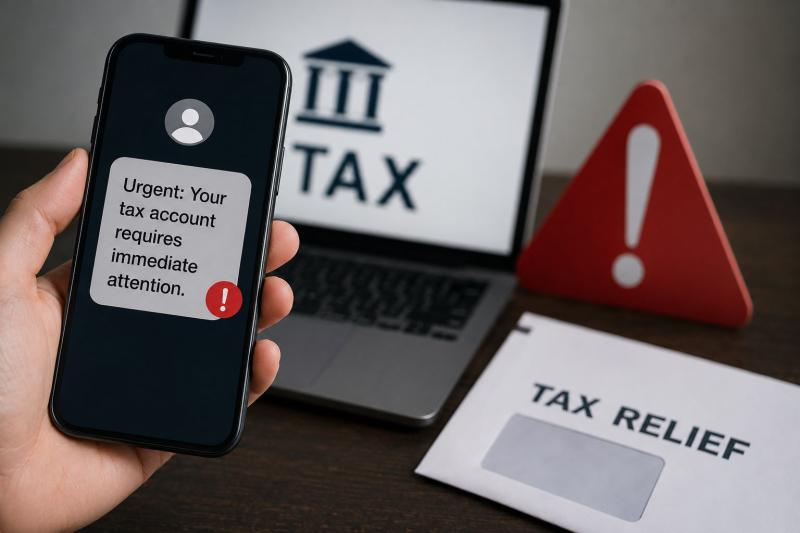
Many people have reported receiving unexpected text messages, emails, and voicemail messages claiming to be from Universal Tax Associates, Universal Tax Advocates, Tax Relief Advocates, Tax Consultants of America, US Tax Consultants, American Tax Consultants, and other tax related names. These messages often create fear by claiming that the recipient has unpaid taxes, an urgent IRS matter, or a limited time tax relief opportunity.
While some names used in these messages may belong to real businesses, scammers are abusing legitimate sounding company names to make their fraud attempts look trustworthy. The main issue is about unexpected tax related communication asking you to act urgently, share personal information like Social Security Number (SSN), banking details, or make payments.
Scammers are running phishing and robocall campaigns where they pretend to represent tax relief companies or tax consultants. They may contact victims through:
The message usually claims that the recipient has a tax issue that requires immediate attention. The scammer may say things like:
The goal is to create panic so people do not stop to verify whether the message is genuine.
Another version of this scam involves automated voicemails from scammers using the name Tax Consultants of America. These messages often claim that you have an urgent tax issue, unpaid balance, or available tax relief option and ask you to call back immediately. The goal is to pressure victims into sharing personal information or paying fake fees.
An important point is that scammers often use the names of real companies or common business names to look legitimate. For example, Tax Relief Advocates (TRA) is a legitimate corporate tax resolution firm having headquarter in Irvine, California, with BBB accreditation and physical offices in multiple states. The company employs real tax professionals, including tax attorneys and enrolled agents, to help clients resolve tax issues with the IRS. However, scammers can still impersonate real companies by copying their names, logos, or business details to appear trustworthy.
Similarly, Tax Consultants of America is a generic business name used by various registered, independent tax preparation and local payroll businesses in the United States. A scammer using this name does not mean every business with the same name is involved in fraud. Instead, criminals often misuse real or common business names to trick people into trusting fake tax related messages, calls, or emails.
This type of impersonation is common because people are more likely to trust a message that come from a professional tax company rather than an unknown person.
The important question is not only "Is this company name real?" but also:
Unexpected Tax Messages:
The biggest warning sign is receiving a tax related message when you were not expecting any communication. A legitimate tax professional normally does not randomly contact people and demand immediate action through a text message or voicemail.
Fake IRS or Government Claims:
Scammers often make their messages sound official. They may claim they work with the IRS or can solve a government tax problem. They may promise:
These claims are designed to attract attention and create urgency.
Requests for Personal Information:
The main purpose of many phishing attempts is to collect sensitive information, including:
This information can later be used for identity theft or financial fraud.
Upfront Payment Requests:
Another warning sign is when someone demands money before providing any legitimate service.
Scammers may request:
Legitimate tax professionals normally explain their services, fees, and agreements clearly instead of demanding urgent payments through unusual methods.
Pressure and Fear Tactics:
Many scam messages use phrases designed to make people act quickly.
For example:
This urgency is a common manipulation technique. Scammers want victims to react emotionally instead of verifying the information.
A fake voicemail may sound like:
“This is an urgent message regarding your tax balance. Our office has been assigned to help resolve your IRS matter. Call this number immediately before your options expire.”
A fake text message may say:
“You have been selected for a tax relief program. Contact Universal Tax Advocates now to avoid penalties.”
A fake email may include:
“Your account qualifies for a Fresh Start tax reduction. Click here to speak with a tax specialist.”
These messages may look professional, but the unexpected contact and pressure are major warning signs.
Real tax companies may advertise their services, and some may use public information such as tax lien records to reach potential customers. However, legitimate companies generally do not use aggressive messages that demand immediate action without explaining who they are and why they contacted you.
If you actually have a tax problem:
The IRS has specific communication procedures. The IRS generally starts important tax communication through official mail. It does not normally send unexpected text messages or emails demanding immediate payment.
The IRS also does not demand payment through:
If someone claims to represent the IRS and pressures you to pay immediately, it is a major warning sign.
If you receive a suspicious Universal Tax Associates, Universal Tax Advocates, or similar message:
You can report suspicious tax related scams to the Federal Trade Commission (FTC) and forward suspicious IRS related emails to the IRS phishing reporting channel.
Universal Tax Associates, Universal Tax Advocates, Tax Relief Advocates, Tax Consultants of America, US Tax Consultants, American Tax Consultants and similar tax related impersonation scams show how criminals use trusted names to target people by creating stressful situations. The presence of a real company name does not automatically make a message legitimate, because scammers frequently misuse real business identities.
The safest approach is simple: never trust unexpected tax messages that create fear, demand urgent action, or request personal information. Always verify independently before sharing your Social Security Number (SSN), banking information or making payments.
Disclaimer: The information in this article is provided for educational and awareness purposes. Company names, phone numbers, sender names, and other details referenced may have been impersonated, spoofed, or otherwise misused by scammers. Their appearance in this article does not necessarily identify the legitimate company, owner of a phone number or account as being involved in fraudulent activity.
This article has been written by a Scam Fighter Contributor, De-Reviews.com Team. If you believe the article above contains inaccuracies or needs to include relevant information, please contact ScamAdviser.com using this form.
De-Reviews.com Team is a group of scam researchers, editors, and online safety advocates dedicated to exposing online fraud and helping consumers stay safe online. The team has been investigating scams, fraudulent websites, phishing campaigns, and other online threats since 2014. Read the Full Author Profile.
