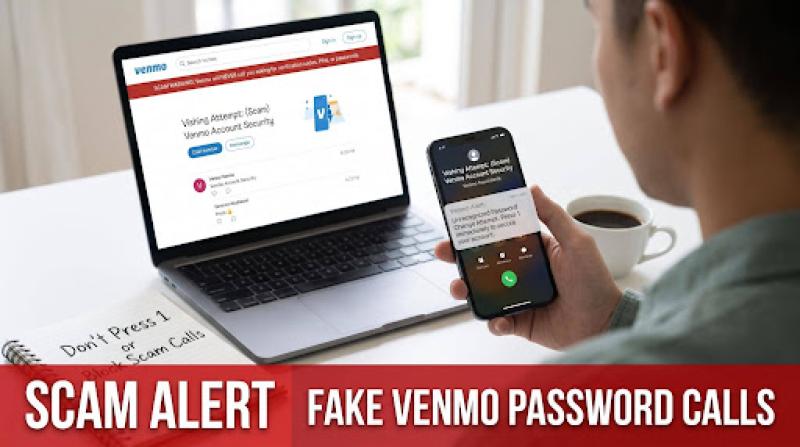
Scam alert: Venmo users are getting automated voicemails warning that someone tried to change their account password. The message asks you to press "1" if it wasn’t you, then walks you through "securing" your account with a scammer on the line. Venmo has confirmed it is a vishing (voice phishing) scam designed to take over your account.
What the Voicemail Says
The Hearst Television National Consumer Unit obtained one of the recordings. In it, an automated voice says the call is about an attempt to change the password on your Venmo account and asks you to "press one" if that wasn't you.
It’s built to cause a moment of panic. If someone is trying to break into your account, of course you want to stop them—and the call offers what looks like the fastest fix.
How the Scam Works
- The scare. You get an unexpected robocall or voicemail about a password change you didn't make.
- The handoff. Pressing one connects you to a live scammer posing as Venmo support, or prompts you to call back a number they provide.
- The "fix." The fake agent offers to help you set a new password while staying on the line. Along the way, they ask you to read out the verification code Venmo texts you, your current login details, or your bank or card information.
- The takeover. That verification code is exactly what the scammer needs to reset your password themselves. Once they're in, they can lock you out and drain your balance, sending money from linked bank accounts and cards to themselves.
The password-change attempt in the voicemail is often the scammer's own doing, or it never happened at all. Either way, the real danger starts when you press one.
Will Venmo Pay You Back?
Venmo's User Agreement treats money sent after someone fraudulently obtains your password as an unauthorized transaction and says it will cover the full amount if you follow its procedures, including reporting the fraud promptly. Wait more than 60 days to report it, and you could lose that protection entirely.
When asked whether victims of this specific vishing scam would be reimbursed, Venmo didn't give a direct answer, stating that each case is reviewed separately. Don't count on getting your money back—count on not handing over your details in the first place.
Red Flags
- An unexpected call or voicemail about your account, especially an automated one
- Being prompted to "press one" or "call this number" to stop an urgent problem
- Anyone offering to help you change your password while staying on the phone
- Requests for a verification code, password, PIN, or bank or card details. Important: Venmo will never ask customers to share passwords, verification codes, or financial information by email, text, or phone. Anyone who does is not Venmo.
- Intense pressure to act right now before your account is "compromised"
How to Protect Yourself
- Don't engage. Don't press any numbers or give any information. Hang up and block the number.
- Check for yourself. If you're worried, open the Venmo app directly, or type venmo.com into your browser, and review your security settings and recent activity there.
- Never share a code. A verification code is your account's last line of defense. Nobody legitimate—even Venmo support—needs you to read it to them.
- Secure your logins. Use a strong, unique password and make sure two-factor authentication (2FA) is enabled in your security settings.
- Set up a PIN. In the Venmo app's settings, set up a PIN or biometric lock (FaceID/Fingerprint) if you haven't already.
What to Do If You Fell for It
- Contact Venmo immediately. Call Venmo's official customer support at 1-855-812-4430 or use the in-app chat (Me > Settings > Get Help > Chat With Us) to report the scam. Do not use any numbers given during the phone call.
- Secure your accounts. Change your Venmo password, and your email password if it shares the same login details.
- Review your history. Go through your transaction history and report any unauthorized payments. Report quickly: delays of more than 60 days can void Venmo’s protection.
- Contact your bank. Alert your bank or card provider if they are linked to the account to block unauthorized withdraws.
- File a complaint. Report the fraud attempt to Venmo even if you lost nothing, and to the FTC at ReportFraud.ftc.gov.
Adam Collins is a cybersecurity researcher at ScamAdviser who operates under a pseudonym for privacy and security. With over four years on the digital frontlines, he specialises in translating complex threats into actionable advice. His mission: exposing red flags so you can navigate the web with confidence.
See Full Bio