
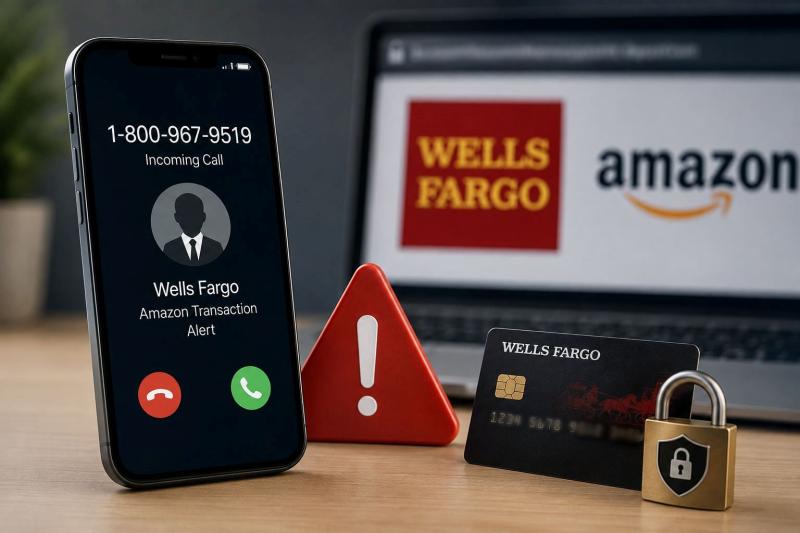
The 1-800-967-9519 Wells Fargo Amazon scam call is a robocall that falsely claims an Amazon transaction was declined and tries to make recipients call the suspicious number. The number has no verified official business connection, and scammers may use caller-ID spoofing to appear legitimate.
Their goal may be to obtain sensitive information, one-time codes, remote access, or money. Consumers should hang up, avoid sharing information, and verify any alleged transaction directly through official Wells Fargo and Amazon channels.
The scam typically begins with an unexpected automated call or robocall claiming to be a Wells Fargo security alert. The message may say that an Amazon transaction was declined or that an order has been detected on your account. If you did not authorize the transaction, the recording tells you to call 1-800-967-9519.
This creates a believable story because Amazon purchases and bank transactions are familiar to most consumers. The caller is essentially combining two trusted names, Amazon and Wells Fargo to make the warning appear legitimate.
However, receiving a call that claims to connect an Amazon problem with your Wells Fargo account should be treated with caution. You should independently check both services rather than following instructions provided by the caller.
There is no verified official business connection identified for 1-800-967-9519. The fact that a number is toll-free does not make it legitimate. Toll-free numbers can be used by legitimate organizations, but scammers can also use or spoof such numbers. The FTC explains that scammers can make fake names or numbers appear on caller ID, including numbers that appear to belong to businesses or banks.
There is also a similar looking Wells Fargo number, 1-800-967-9521, associated with a legitimate Wells Fargo credit-card application service. A similar number can make a suspicious call appear more credible, but it does not establish that 1-800-967-9519 belongs to Wells Fargo.
Wells Fargo advises customers to verify suspicious communications through official channels rather than trusting the phone number displayed on caller ID.
The scam generally follows a simple social-engineering pattern.
The "Amazon Order" Trick:
The automated message claims that an Amazon purchase or transaction was declined or that a potentially unauthorized order has been detected. The goal is to make you worry that someone is using your account.
The "Bank Protection" Trap:
The caller presents itself as a Wells Fargo security system or representative. You may be told that the bank is protecting your money or that you need to verify the transaction. This can make the victim believe that following the caller's instructions is a security measure.
The Real Goal:
Once you engage with the scammer, the conversation may shift toward obtaining sensitive information or access.
For example, the scammer may ask for:
These are major warning signs. Wells Fargo specifically warns customers never to share passwords, PINs, or one-time access codes in response to unexpected requests. It also warns against giving callers remote access to devices.
One-time codes can help criminals bypass an important layer of account security. For example, a victim may receive a legitimate verification code from their bank while speaking to a scammer. The scammer may then claim that the code is needed to cancel the fraudulent transaction or verify your identity. In reality, providing the code may help the criminal authorize an action they initiated.
Wells Fargo explains that two-step verification can use a one-time code to help protect an account and warns customers not to share such codes in response to unexpected requests.
Several warning signs make this type of call particularly suspicious:
Wells Fargo states that it will not ask customers for their PIN, online banking password, or one-time access codes and advises customers not to call phone numbers included in suspicious communications.
The safest approach is to hang up and verify everything independently. Do not press buttons, follow automated instructions, or call the number provided in the message.
If you have a Wells Fargo account, contact the bank using the telephone number printed on the back of your debit or credit card or another official Wells Fargo channel. Wells Fargo specifically says customers should contact the bank immediately using the number on the back of their credit or debit card if they suspect fraud or an unauthorized transaction.
For the Amazon part of the claim, open the official Amazon website or mobile app yourself and check your order history. Do not use a link or telephone number supplied by the caller.
If there is no suspicious Amazon order and you did not initiate the transaction mentioned in the call, that is another strong indication that the message was simply a scam tactic.
If you only answered the call and did not provide information, install software, or follow instructions, you can generally end the conversation and block the number.
If you gave the caller sensitive information, shared a one-time code, transferred money, clicked a suspicious link, or allowed remote access, take action immediately.
Contact Wells Fargo through an official number and explain exactly what happened. Wells Fargo advises customers to contact the bank promptly if they shared account information, one-time access codes, or other sensitive information.
If remote access software was installed, disconnect the device from the internet if appropriate, remove the unauthorized software, and consider having the device checked for further compromise.
The FTC provides specific steps for people who gave scammers access to their computer or phone, including updating security software, scanning the device, changing passwords, and enabling two-factor authentication.
A few simple habits can significantly reduce the risk of falling for bank impersonation scams:
Wells Fargo recommends slowing down when a communication creates urgency and verifying the organization through an independent, trusted channel.
Calls from 1-800-967-9519 claiming to be Wells Fargo about an Amazon transaction should be treated as a scam. The number has no verified official business connection, and reports describe it being used for automated calls impersonating Wells Fargo and referencing Amazon transactions. The use of caller-ID spoofing also means that even a legitimate looking phone number cannot prove who is actually calling.
The safest response is simple: hang up, do not provide codes or personal information, do not install remote-access software, and verify the supposed transaction directly through the official Wells Fargo and Amazon channels.
If you receive this call, remember that legitimate fraud protection does not require you to surrender control of your accounts or devices to an unexpected caller.
Disclaimer: The information in this article is provided for educational and awareness purposes. Company names, phone numbers, sender names, and other details referenced may have been impersonated, spoofed, or otherwise misused by scammers. Their appearance in this article does not necessarily identify the legitimate company, owner of a phone number or account as being involved in fraudulent activity.
This article has been written by a Scam Fighter Contributor, De-Reviews.com Team. If you believe the article above contains inaccuracies or needs to include relevant information, please contact ScamAdviser.com using this form.
De-Reviews.com Team is a group of scam researchers, editors, and online safety advocates dedicated to exposing online fraud and helping consumers stay safe online. The team has been investigating scams, fraudulent websites, phishing campaigns, and other online threats since 2014. Read the Full Author Profile.
