
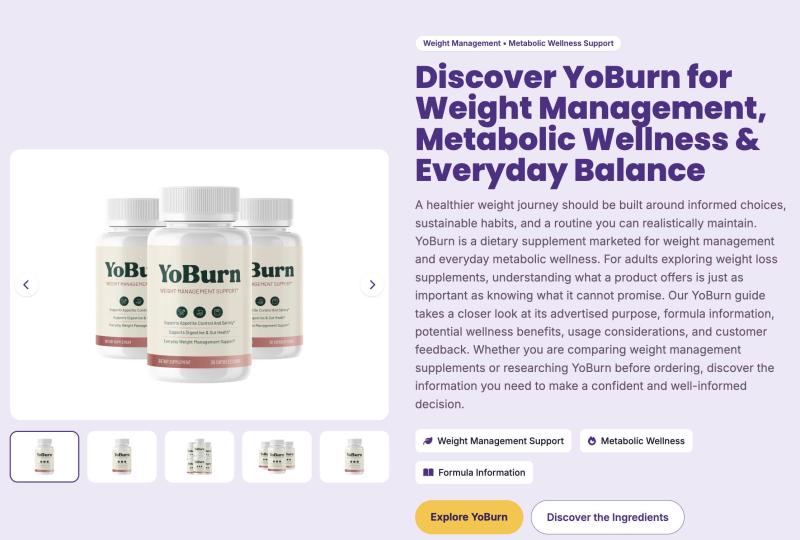
YoBurn is a dietary supplement marketed online for weight management, appetite control, and metabolic support. While promotional pages claim YoBurn may help users manage cravings and boost daily energy without harsh stimulants, publicly available information across multiple storefronts and consumer investigations suggests buyers should approach this product with caution. Before placing an order, it may be helpful to examine its advertised ingredients, clinical dosage standards, and notable marketing red flags.
YoBurn appears to be sold through several different promotional websites, each describing the formula slightly differently. Depending on the storefront visited, YoBurn may be presented as a gut-health probiotic capsule, a stimulant-based fat burner, or a fiber-based wellness blend. Because there does not seem to be a single, verified manufacturer listing on major retail marketplaces at the time of this review, buyers may find it difficult to verify which version of YoBurn represents the actual product.
A major challenge when evaluating YoBurn is the absence of a clear Supplement Facts label showing exact milligram amounts on its promotional pages. Across different websites, YoBurn is advertised as containing ingredients such as:
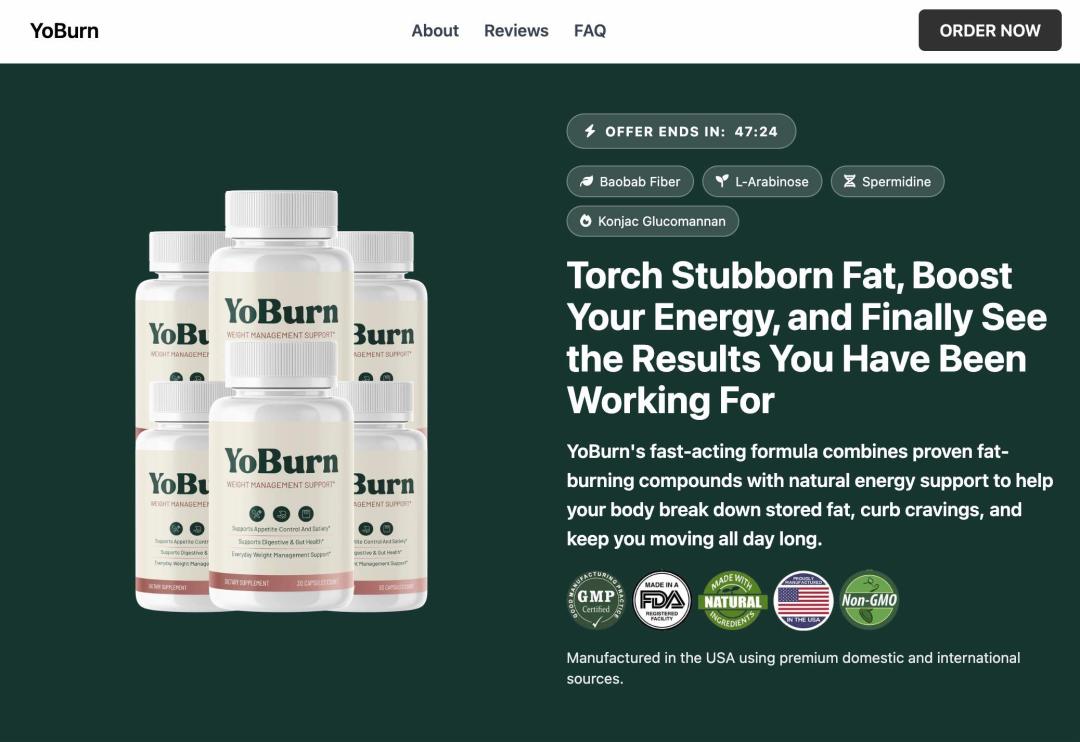
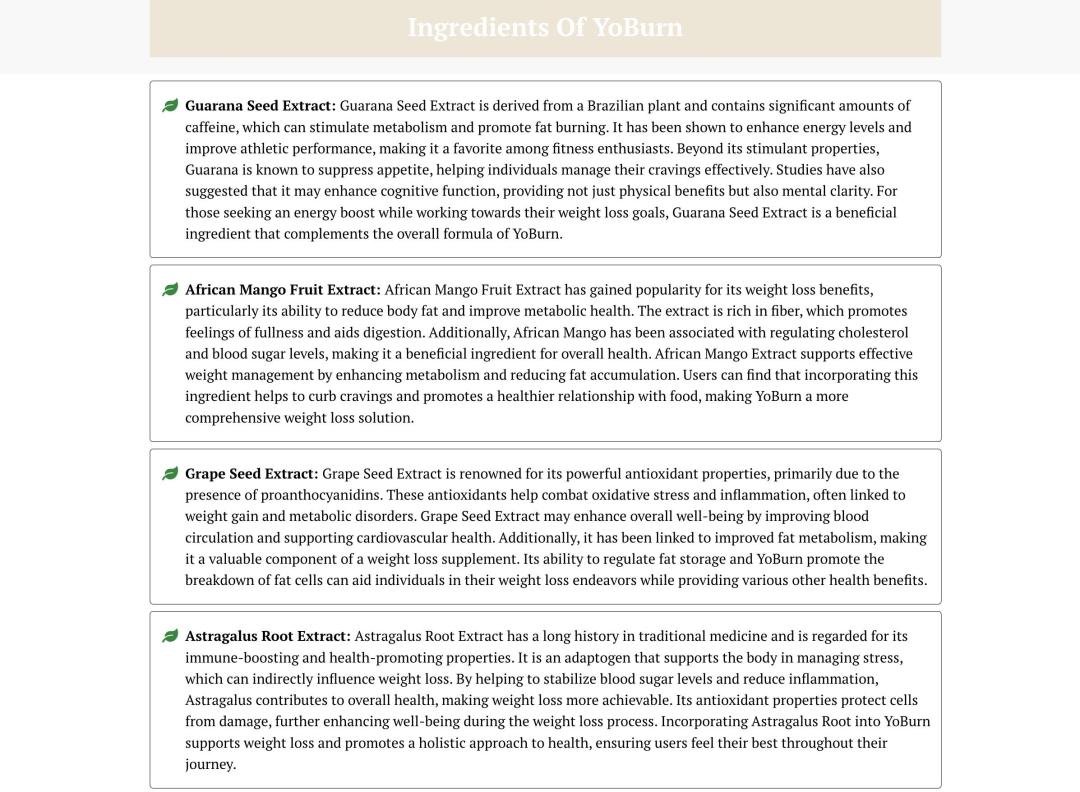
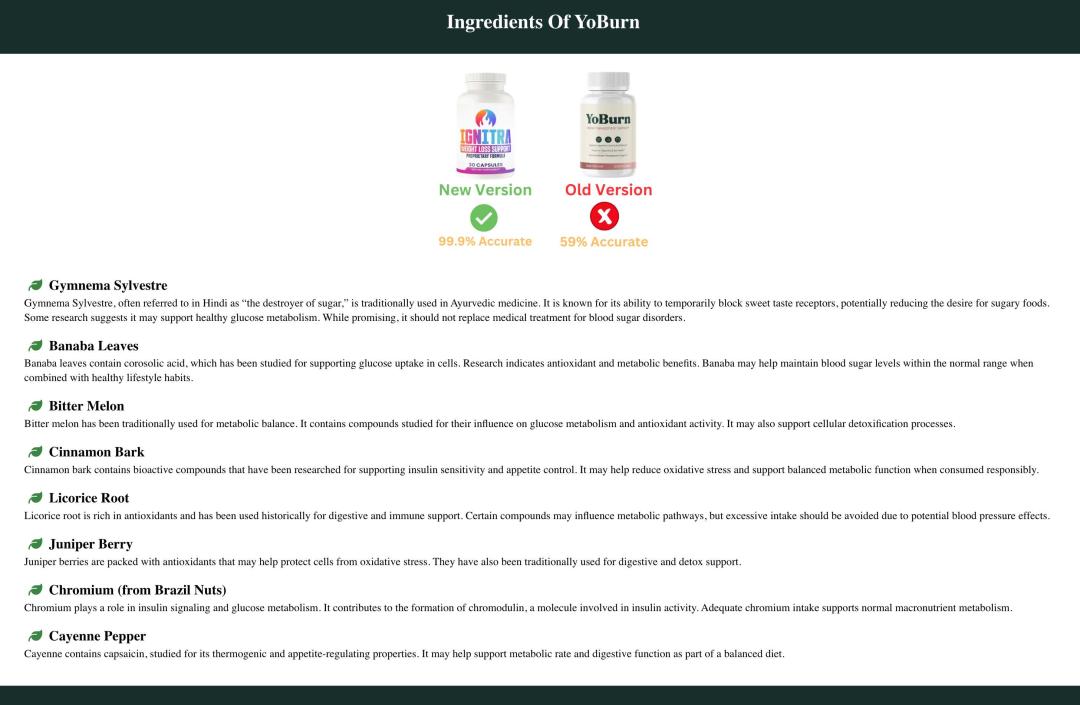
As per publicly available information, independent reviewers' videos, and storefront comparisons, several concerns appear to surround how YoBurn is promoted online:
Potential Pros YoBurn Weight Loss Supplement:
Potential Cons YoBurn Weight Management Supplement:
While some individual ingredients listed on YoBurn promotional pages may offer mild metabolic or digestive support in clinically studied amounts, the lack of transparent labeling makes it impossible to verify what each bottle actually contains. Given the conflicting product information and publicly reported marketing concerns, YoBurn may not be the most reliable option for consumers seeking a transparent, evidence-backed weight management supplement. Speaking with a healthcare professional and choosing products with verified third-party testing and full Supplement Facts labels may be a safer approach.
This independent review is published strictly for educational, informational, and consumer-awareness commentary purposes. All observations, comparisons, and opinions expressed in this article represent the author’s good-faith analysis of publicly accessible promotional webpages, ingredient descriptions, published scientific literature, and third-party consumer reports available at the time of writing.
Because online marketing pages, formulations, and seller terms change frequently without notice, the author makes no warranties regarding the ongoing accuracy or completeness of third-party product information.
Nothing in this article should be construed as a definitive statement of fact regarding the legality, intent, or business integrity of any manufacturer, distributor, or affiliate marketer.
This commentary neither endorses nor condemns any commercial entity and does not constitute legal, financial, or professional medical advice, diagnosis, or treatment. Dietary supplements are not evaluated or approved by the U.S. Food and Drug Administration (FDA) to diagnose, treat, cure, or prevent any disease, and individual results may vary. Readers are strongly encouraged to independently verify product labels and consult a licensed healthcare provider before purchasing or using any dietary supplement.
All product names, images, screenshots, brand references, and trademarks, including "YoBurn" and any third-party brand names mentioned for comparative or descriptive purposes, remain the exclusive property of their respective owners and are referenced solely under nominative fair use for identification and commentary.
This article has been written by a Scam Fighter Contributor, De-Reviews.com Team. If you believe the article above contains inaccuracies or needs to include relevant information, please contact ScamAdviser.com using this form.
De-Reviews.com Team is a group of scam researchers, editors, and online safety advocates dedicated to exposing online fraud and helping consumers stay safe online. The team has been investigating scams, fraudulent websites, phishing campaigns, and other online threats since 2014. Read the Full Author Profile.
