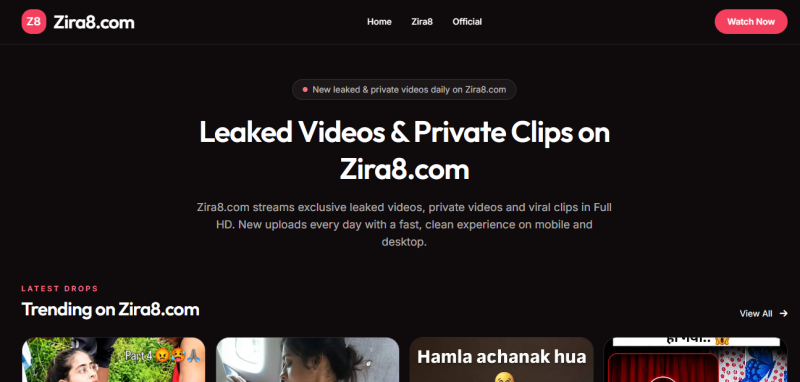
Short answer: No. Zira8.com describes itself as a source for exclusive leaked videos, private videos, and viral clips in Full HD. That description alone tells you what you need to know. A site whose main pitch is access to private, leaked material is not something to trust, and the pattern around it matches other sites already flagged for the same behavior.
The site's pitch is streaming exclusive leaked videos, private videos, and viral clips in Full HD, with new uploads every day and what it calls a fast, clean experience on mobile and desktop. Strip away the polish and this is a site advertising other people's private footage as a daily product. "New uploads every day" isn't a feature. It means the supply of non-consensual or stolen content is treated as a pipeline that needs to keep flowing to keep visitors coming back.
Zira8.com isn't an isolated case. Zira7.com and Zira9.com run on nearly identical branding, layout, and content categories. That pattern, matching names, matching structure, matching claims, is typical of operators who spin up several near-identical domains at once. When one gets reported, blacklisted, or taken down, the others keep running and a new one usually appears to replace it.
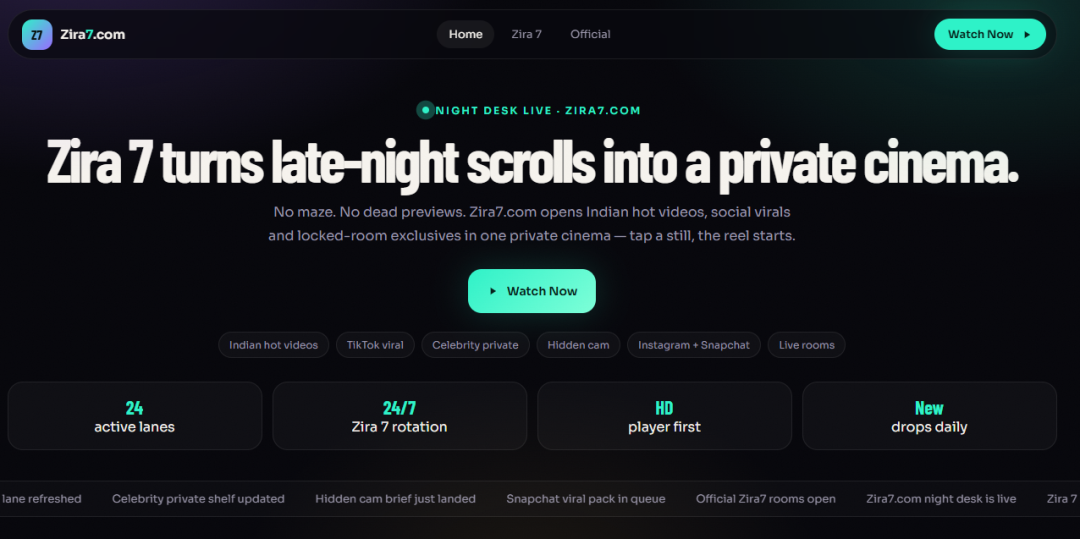
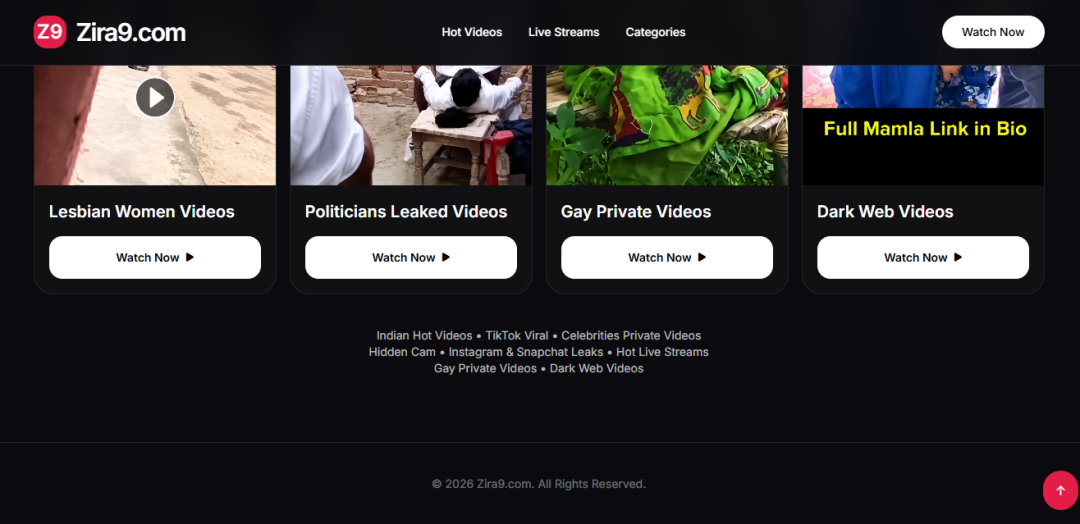
This matters for anyone trying to judge safety from a single domain check. A clean report on one of these sites today says very little about tomorrow, since the operation isn't really tied to any one domain. It's tied to the content and the traffic model, and both of those move freely between sites.
As with the rest of this network, clicking a video on Zira8.com doesn't reliably take you to the video. It routes you through other domains first, typically ones running heavy ad traffic, fake system alerts, or prompts to install something. Every hop in that chain is a chance for a malicious script to run or for you to be talked into downloading software you didn't ask for.
Treat any site where the first click leads somewhere unrelated to the content you clicked on as a site not worth continuing to use, regardless of how the homepage looks.
Two separate legal problems sit on top of each other here. Reposting video without the rights holder's permission is straightforward copyright infringement. But "leaked" and "private" content usually means something recorded or shared without the consent of the person shown in it. That crosses into territory covered by non-consensual image and video distribution laws in many countries, which exist specifically because this kind of content causes real harm to real people, separate from whatever the copyright question looks like.
A site doesn't need to lose a copyright claim to be doing serious damage. The consent question is the one that matters most, and it's the one a "trust score" will never capture.
Before treating a site like this as harmless, weigh a few things:
If you came here because someone is threatening to release private images or video of you, the useful next step isn't browsing sites like this one. Save any messages you've received as evidence, stop responding to the person making the threat, and report it through your national cybercrime channel, or the FBI's Internet Crime Complaint Center at ic3.gov if you're in the US. StopNCII.org can also help block images from being shared further without you having to upload them anywhere public.
Overall, there is a high possibility that Zira8.com unsafe.
Zira8.com fits the same pattern as Zira7.com and Zira9.com almost exactly: a redirect-based traffic model layered on top of a content library that depends on other people's private material. The branding changes from one domain to the next. The underlying operation doesn't.
See More interesting articles from ScamAdviser:
This article has been written by a scam fighter volunteer. If you believe the article above contains inaccuracies or needs to include relevant information, please contact ScamAdviser.com using this form.
Adam Collins is a cybersecurity researcher at ScamAdviser who operates under a pseudonym for privacy and security. With over four years on the digital frontlines, he specialises in translating complex threats into actionable advice. His mission: exposing red flags so you can navigate the web with confidence.